Philadelphia Code §14-604(11) sets a narrow ADU route. The City’s published code section identifies where an ADU may be located and which home type must already be on the lot. The code page identifies itself as the 2026 Code; verify later amendments and the City’s official copy before relying on it.
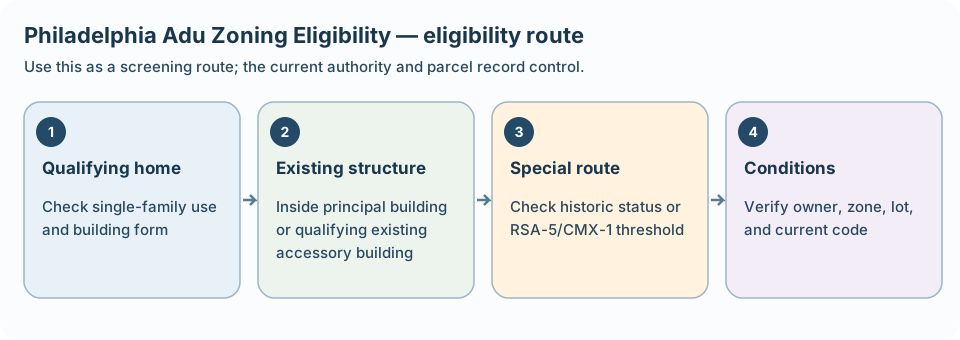
Check the home, structure, and zoning district
The general rule allows an ADU on a lot with a single-family use in a detached or semi-detached building. The unit must be inside the principal building or inside an existing detached accessory building, such as a garage, that existed when the code took effect. The general rule does not describe a new detached ADU building.
The code separately allows ADUs in qualifying historic structures, including a designated historic building or a contributing building in a historic district. In RSA-5 and CMX-1 districts, an ADU may qualify on a lot of at least 1,600 square feet where no more than one dwelling unit is otherwise permitted. Confirm the exact zone, lot area, building status, and historic designation with the City.
Confirm the remaining eligibility conditions
The code limits a lot to one ADU and generally caps its floor area at 800 square feet, with an exception for qualifying historic structures. It also requires the principal or accessory dwelling to be occupied by the lot owner and a recorded owner-occupancy affidavit and deed restriction before final occupancy. Those conditions do not replace other zoning-district and permit requirements.
Philadelphia’s code page warns that its text may not include the latest adopted legislation. Use the City’s current code and parcel review to confirm the applicable route; this guide does not decide a particular property’s eligibility.