The right route depends on the property, the proposed use and form, and the authority that decides the application. “ADU” is a useful search term, but it does not guarantee that a local code uses that label or treats an in-house suite, converted garage, detached cottage, or annexe the same way.
Identify the decision-maker and project
Start with the exact address or parcel and determine which planning or zoning authority covers it. Record the local name for the proposed unit, whether it is attached or detached, whether it creates an independent dwelling, and whether the work is new, an addition, a conversion, or an existing unit. Check relevant overlays, historic or conservation controls, easements, and site conditions before assuming a general route applies.
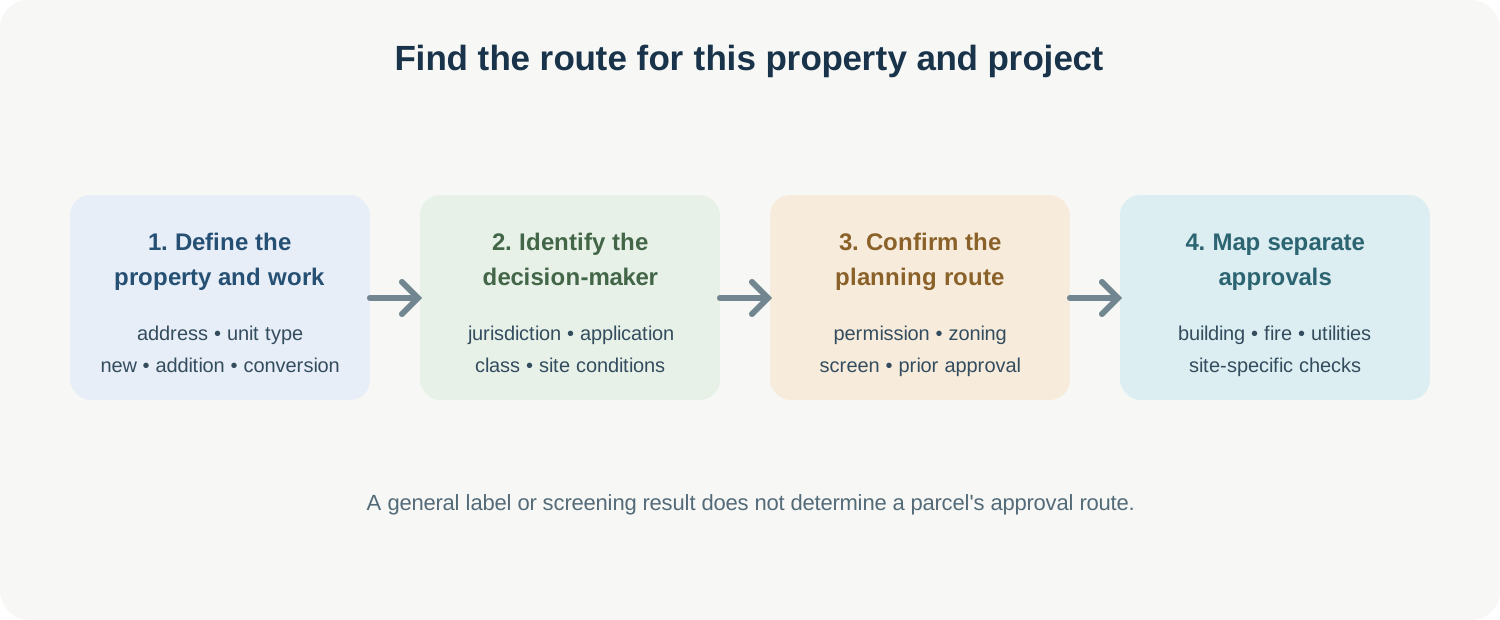
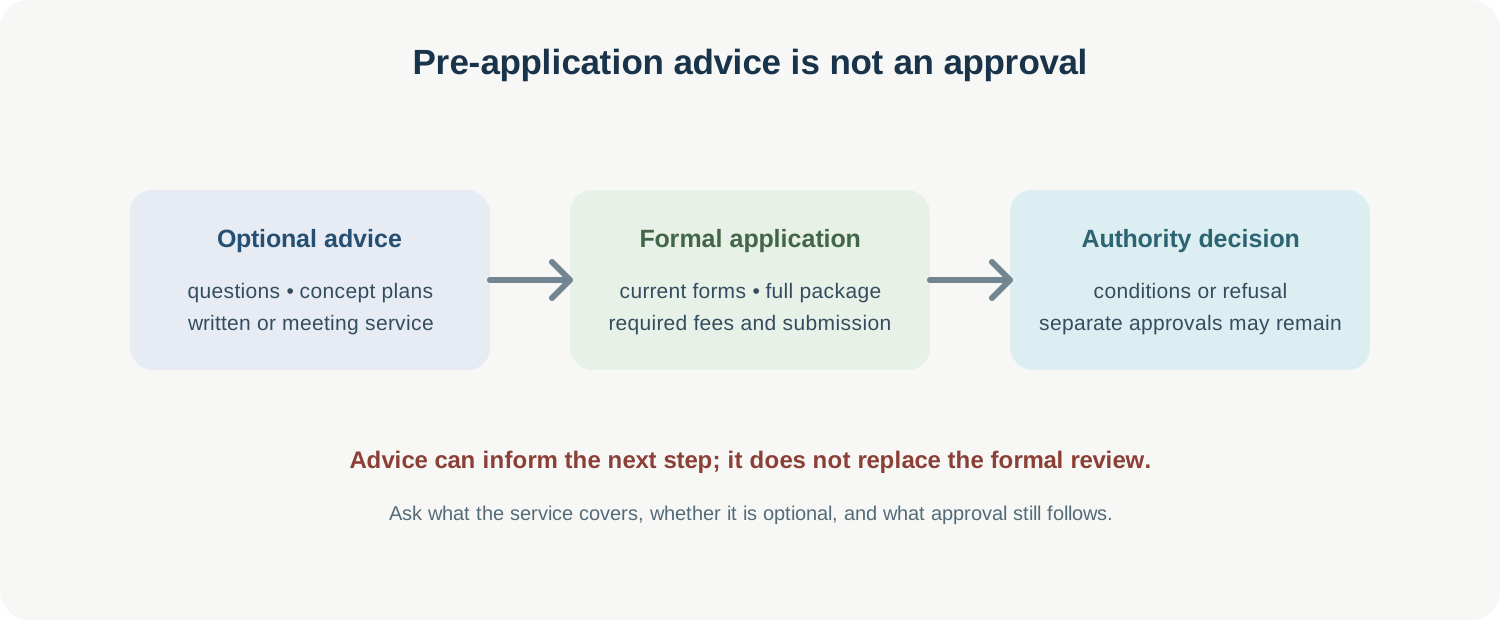
Then ask the planning authority which process applies to those facts. Depending on local law, it may be a zoning or development permit, a discretionary planning application, a limited prior-approval process, a permitted-development route, or a formal determination that permission is not required. Some places offer a pre-application review or screening service. Ask what the service covers, what plans it needs, whether advice is written, and which later approvals remain separate.
Treat each approval as a separate decision
Planning or zoning approval addresses land use and development permission. Building approval addresses technical construction requirements. Fire, utility, drainage, environmental, heritage, and other authority reviews may also apply. A planning decision does not establish building-code compliance, utility capacity, or private consent.
For example, England’s national planning guidance describes local planning permission, permitted-development rights, local orders, and certificates of lawful development. Those routes have conditions and can be affected by local restrictions. England-specific guidance must not be applied to Wales, Scotland, or Northern Ireland. In Wales, rules for outbuildings refer to incidental use and do not by themselves establish that a self-contained second dwelling qualifies. In Aberdeenshire, local non-statutory guidance distinguishes ancillary accommodation from a new dwellinghouse; that local interpretation is not a Scotland-wide rule. Use the four-nation route overview for the UK distinction.
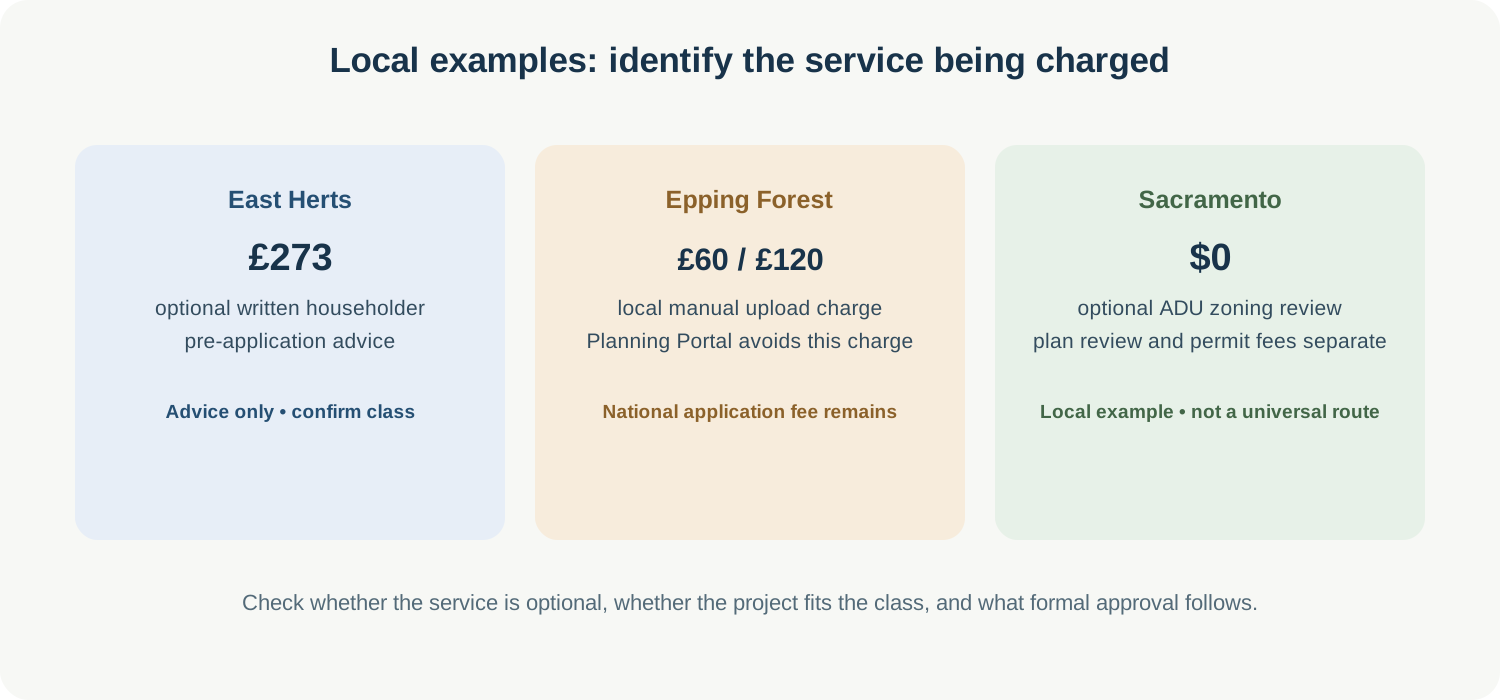
Local examples also show why classification and service type matter. Vancouver’s laneway-house process and Calgary’s secondary-suite guide describe distinct application paths. East Herts lists optional householder pre-application advice at £273 including VAT for written advice from 1 April 2026; confirm that an ADU proposal fits that service class before paying. In Epping Forest, the local manual-submission charge can be avoided through the Planning Portal, but the national planning application fee still applies. Sacramento’s current ADU guide lists optional zoning review as free; its building-plan review and later permit fees are separate. These are local examples of service and channel choices, not templates for another authority’s route.
Ask the authority focused questions
Before paying for a full application package, ask the responsible authority:
- What local term and application class match this unit and intended use?
- Is planning or zoning permission required, and what site conditions or prior approvals could change the answer?
- Is a pre-application service available, what does it determine, and is the result advisory or a formal decision?
- Which building, fire, utility, environmental, heritage, or other approvals are separate, and in what order should they be checked?
- What current form, plan set, fee schedule, decision period, notice, appeal, and validity rules apply?
Keep the authority’s written answer and the date you checked it with the property record. If the authority cannot determine the route without more detail, treat the answer as unresolved and obtain the missing parcel or design information.
The application class also controls appeal rights and deadlines. For an English planning refusal or a decision that has not arrived by the applicable deadline, see the England appeal and non-determination guide.
An application is not approval
A pre-application meeting, screening result, application receipt, or completeness check does not necessarily grant permission. Even where a route may avoid a full planning application, its conditions and limitations still have to be satisfied, and other regimes may still require approval. Do not begin work based only on a search result or an informal indication; confirm the decision, conditions, appeal or review rights, and any other required permits with the responsible authority.