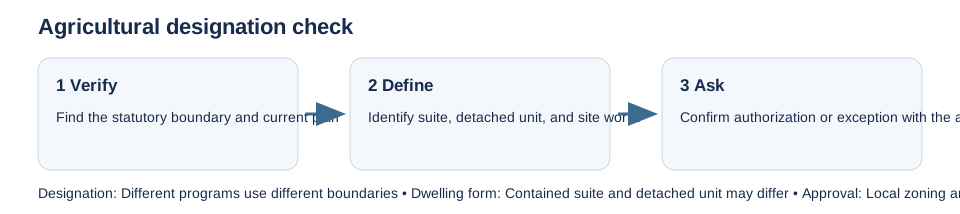
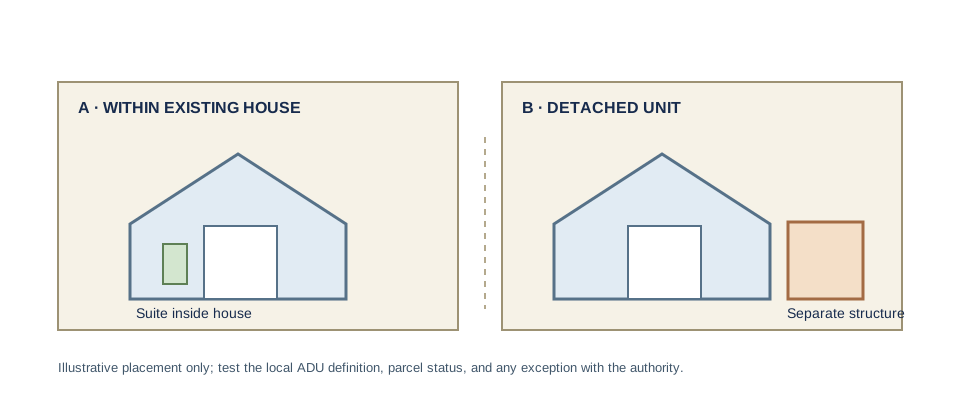
An agricultural reserve, farmland-protection policy, environmental designation, and rural zoning do not have the same legal effect. Confirm the parcel’s designation and the proposed dwelling form before asking whether an ADU is allowed. A house-contained suite may be treated differently from a detached second residence.
British Columbia’s Agricultural Land Reserve rules distinguish a secondary suite within the principal residence from a detached additional residence, and local government or First Nation rules may add conditions. Québec’s agricultural-zone regime generally requires the applicable authorization or statutory exception for non-agricultural use. Ontario Greenbelt maps identify plan areas that need boundary and policy confirmation; a map display is not a parcel determination. New York Critical Environmental Areas are a separate designation that can feed SEQR significance review; they are not agricultural reserves. In the United States, the Farmland Protection Policy Act is principally tied to qualifying federal actions and is not a general private-land building prohibition.
Ask the planning and agricultural authorities which designation instrument and map version apply, whether the proposed dwelling type and servicing are eligible, and whether approval, notice, or an exception is required. Include access, grading, septic, and fill in the description because the land-use review may cover more than the building footprint. Keep heritage, natural-resource, and base zoning checks separate.
A broad map cannot establish exact lot status or project approval. The heritage and rural designations guide covers related local designation checks; this page focuses on the agricultural authority and dwelling-type question.