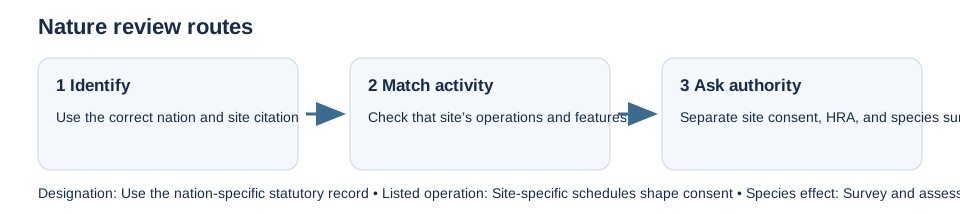
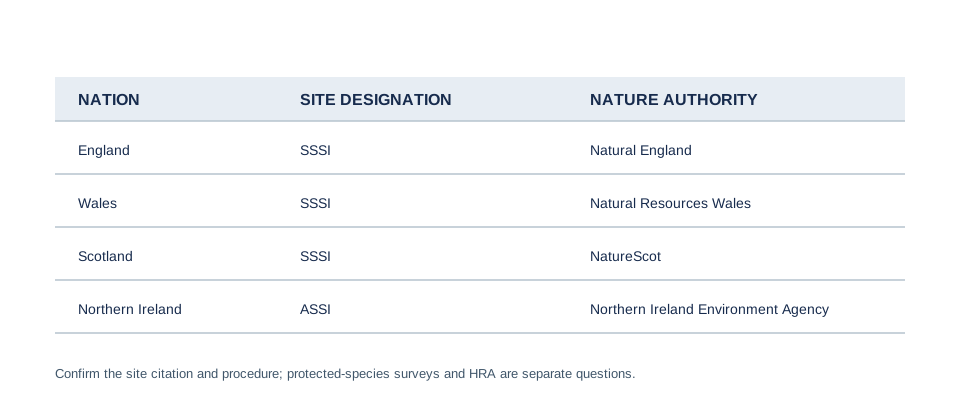
The UK nations use different protected-site lists and consent routes. First identify the designation, its mapped boundary, the nation, and the activities listed for that site. A general nature map or the same acronym on another nation’s portal does not answer the consent question.
In England, check the site citation and its list of operations likely to damage the special interest, then ask Natural England whether consent is needed for the proposed work. A Habitats Regulations Assessment and protected-species survey follow separate, effect-based routes. Wales and Scotland maintain their own SSSI features, operations, authorities, and consent processes; Northern Ireland uses ASSI records and its own notifiable-operations route. Do not reuse an English form, exception, or deadline for another nation.
A local wildlife-site record is different from a statutory site, and a species survey is not the same as site consent. Trees, ponds, building access, lighting, demolition, drainage, and timing may all affect what the authority asks about, but no map result alone establishes that an offence or permit trigger exists.
Before clearing or construction, send the authority the parcel plan and exact work description. Ask whether the footprint or access crosses the designated site, which citation and operations list is current, whether written consent or consultation is required, and whether a protected-species survey is needed at the right season. Keep each route separate in the project record. For local non-statutory England designations, see the Local Sites guide.