A blank search result can reflect an old address, a limited online date range, a restricted file, or a record held by another office. It does not by itself prove that the unit was approved or that approval never existed. First define the record you need and ask the authority responsible for that decision.
Make the search specific
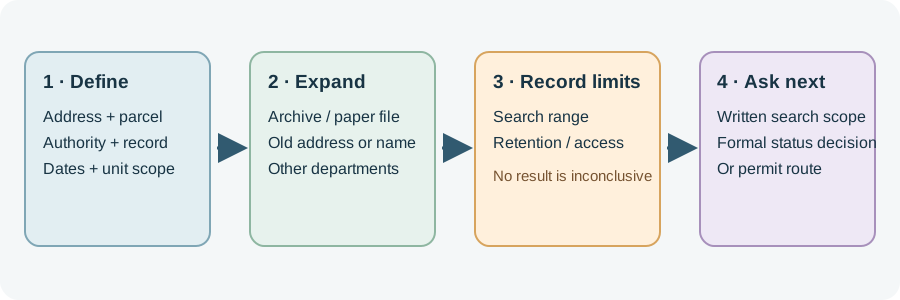
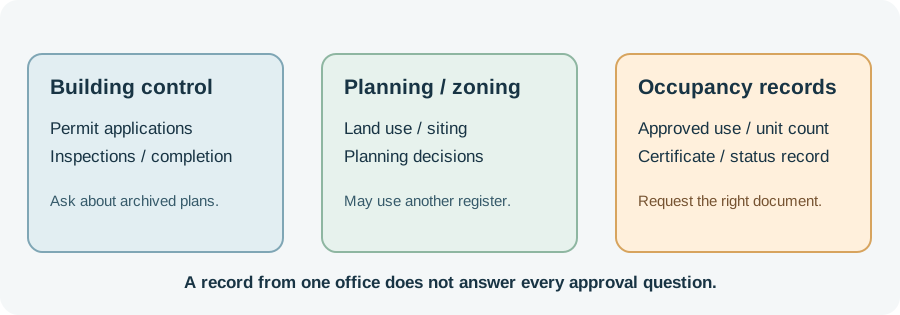
Write down the property address and parcel identifier, any former street number or name, the unit or building description, the approximate work dates, and the approval you are trying to confirm. Planning, building control, fire, occupancy, utility, and land-charge records may be held separately. Ask what years the search covers, whether it includes inspections and final certificates, and whether the authority can search archived paper files.
An online register may be only an index. Milton Keynes City Council’s record-access guidance describes an online Building Control Register for applications from 1997 onward and a separate paid historical search for earlier files; it warns that some physical records may no longer exist. Buckinghamshire’s records request is limited by its stated lookback, document count, and requester rules. Its page lists a £40 non-refundable fee, including when no documents are found; recheck the fee and terms before paying. These are local service limits, not general retention periods.
Request the right output
Ask whether the office can provide a certified copy, a completion or occupancy record, a search report, or a written statement of what was checked. Each answers a different question. Toronto’s Property Information Report expressly does not determine permitted use. Boston’s record-of-legal-occupancy process illustrates a separate branch: where no record of legal occupancy is on file, the City directs the applicant to submit an occupancy-record application and a long-form permit application, with City inspection and sign-off. That is a Boston building-service process, not an ADU legalization rule for other places.
If the authority confirms that no approval record exists, ask about the applicable retrospective permit or regularisation process; do not treat a document-copy request as an application for approval. Compare any records you receive with the unit’s current location, layout, use, later work, and final inspection history. The general legal-status guide and certificate guide explain those comparisons.