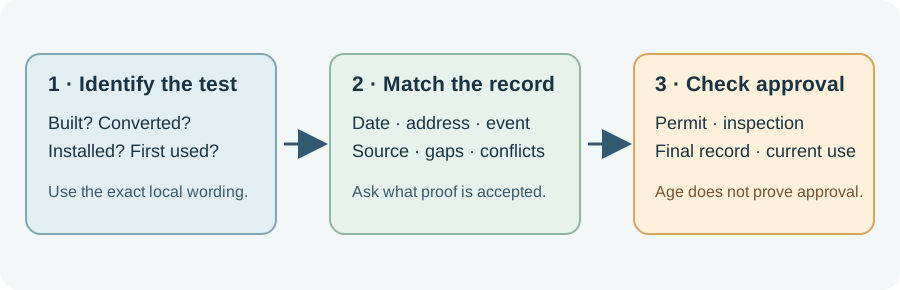
A historic-date test can decide whether an authority will consider a special route, but the test may concern construction, installation, conversion, occupancy, or continuous use. Find the exact date and wording in the current local program before collecting documents. Evidence that a unit existed by a date does not establish that it was permitted, inspected, or approved for its current use.
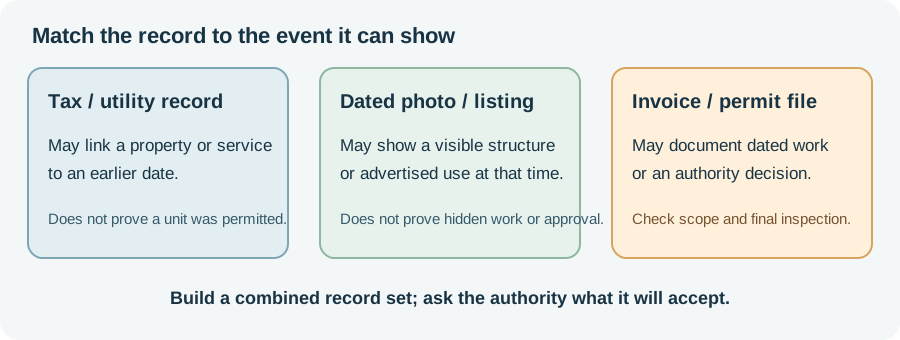
Match each document to the date it can show
Start a simple evidence list with four fields: the record and its date; the address or unit it identifies; the event it can support; and any gap or conflict. A tax record may identify a building without proving when a separate dwelling was installed. A lease or utility bill may support use by a date, while a dated photograph may show a visible feature. Keep later alterations separate from the original unit history.
California’s March 2026 ADU Handbook describes a local checklist and a possible confidential inspection by a licensed contractor before a permit application. The MTC/ABAG implementation memo gives examples such as dated utility or tax bills, leases, receipts, photographs, contractor records, and real-estate documents. These are possible evidence sources, not a statewide guarantee that any item will be accepted. Saskatoon’s Legalizing Existing Suites guidance gives different local examples, including neighbor testimony, historical listings, and dated photos.
Ask what the authority will accept
Before relying on a record, ask the responsible office which event the cutoff concerns, what proof it accepts, whether it will consider several records together, and what happens if dates conflict or documentation is incomplete. Some programs provide a different route if the date cannot be established; others require a current-code application. Those outcomes belong to the local program. See the California state-and-local route guide for one example of state rules and local implementation working together.
Keep the date file separate from the permit-history search. If approval records are missing, follow the missing-record guide. A city may accept an old date for one eligibility test and still require inspection, corrections, permits, or final approval before it recognizes the dwelling.