Regulation 13 of the Building Regulations (Northern Ireland) 2012 is a district-council building-control route for certain work that required Building Regulations notice but was not notified. It applies to building work generally; the law does not create an ADU-specific certificate. Confirm with the relevant council whether the work or change of use for an existing secondary dwelling required notice and which local application process applies.
What the certificate can show
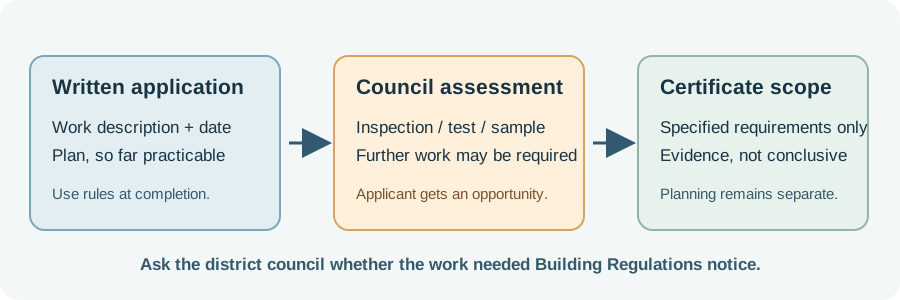
The regulation uses the Building Regulations that were in force when the work was completed. An application is made in writing and describes the work and its completion date, with a plan so far as reasonably practicable. The district council may require reasonable checks, including inspections, drain testing, or material sampling. If it considers further work necessary, it must tell the applicant and allow an opportunity to complete that work before deciding.
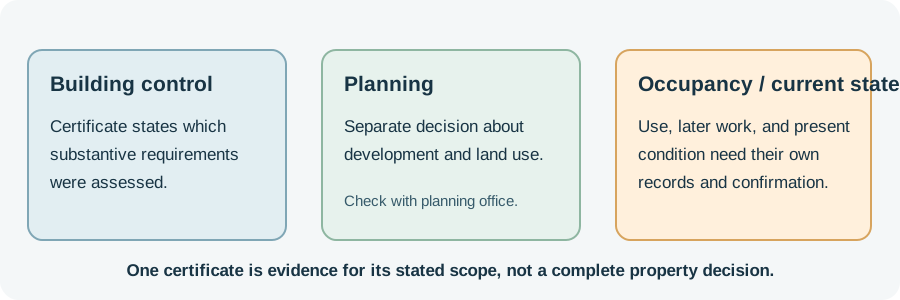
A certificate is evidence, but not conclusive evidence, only for the substantive requirements stated in it. It does not itself decide planning permission, lawful use, occupancy, or whether the present building still matches the inspected work. The legislation page used here is a point-in-time view dated May 6, 2025; check the current text and your district council’s procedure before applying.
Check local forms, dates, and fees
Armagh City, Banbridge and Craigavon Borough Council’s application guidance says its local route may certify work completed without required plans or notices if the applicant demonstrates compliance with the rules that applied at completion; remedial work may be needed. Its guidance refers to work carried out from October 1, 1973, and the Council’s fee information says its regularisation fee is 20% higher than the fee that would have applied before work began. Those are local details, not a Northern Ireland-wide cutoff or fee.
Ask the responsible council what the application must include, how it will check concealed work, what standard applies to the completion date, and which requirements will appear on any certificate. Planning permission is a separate decision: the Council’s guidance says some work may need both building-control and planning approval. See the general certificate guide and the distinct Carmarthenshire example.