Salt Lake City’s published process treats a Certificate of Non-Compliance as a record that must be cleared through the associated permit and a later recording step. Completing work is not the same as removing the City’s certificate. The process below applies to a City notice and its permit; it does not clear every title, court, lien, occupancy, or enforcement record connected with a property.
From correction to recorded certificate
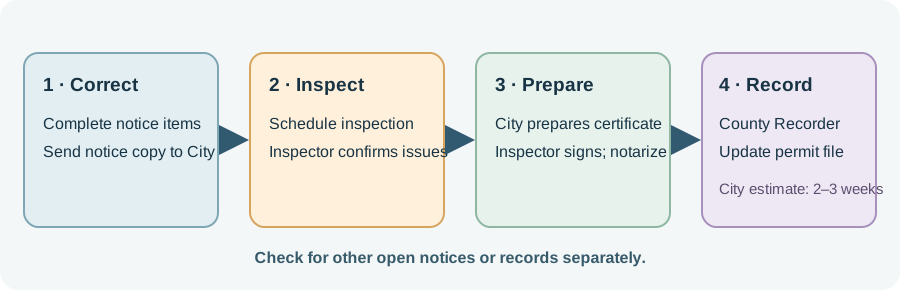
After completing the corrections required by the notice, send a copy of the notice to Building Services and schedule an inspection on the permit in question. If the inspector confirms that all listed issues are resolved, City administrative staff prepare a Certificate of Correction and Compliance for the inspector to sign. The signed certificate is notarized and submitted to the County Recorder. The City says to expect two to three weeks for the recorded certificate to be added to the associated permit; its page is dated May 14, 2025, so confirm current processing with the City.
Verify the separate records
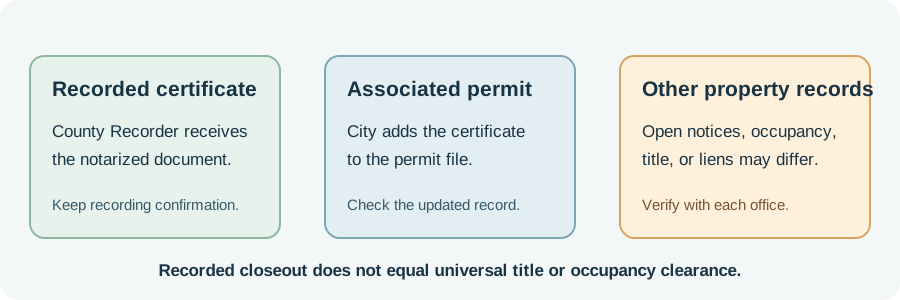
Keep the inspection result, signed certificate, recording confirmation, and updated permit file together. Then ask whether any open City notices or other recorded instruments remain. The City’s Building Services FAQ says public permit and inspection records from 1979 onward can be searched online, while construction plans have separate access limits. A recorded correction certificate does not itself establish an ADU’s approved use or current occupancy status. For a fuller records search, see the missing-record guide and the certificate comparison.