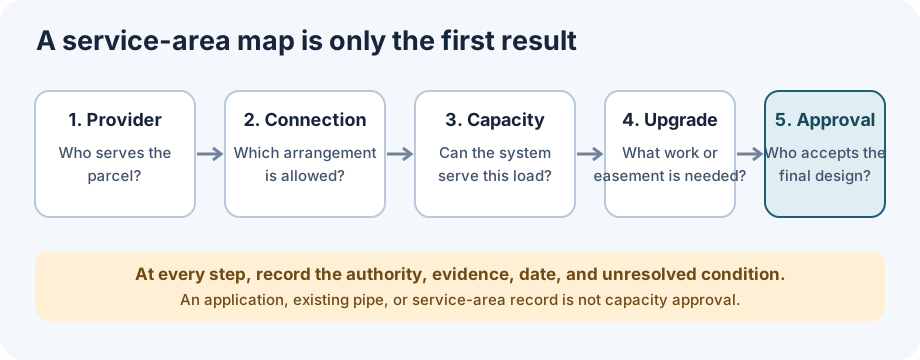
“Water and sewer are available” can describe several different things: a provider serves the area, a connection is allowed, a pipe already reaches the property, or the provider has confirmed capacity for a specific project. Those are different results. None alone proves that a proposed accessory dwelling can connect, meet drainage rules, or receive permit approval.
Map the service arrangement
Identify the water, sanitary sewer, stormwater, and drainage authorities for the parcel. Review the property’s service records, site plan, easements, existing laterals, and any private or shared systems. Ask whether the new unit can use existing connections or needs a separate connection, meter, inspection, or application. A municipal permit office may route a plan to a utility without making the utility’s capacity decision.
For each service, record the status clearly: service area identified; connection permitted; application required; capacity confirmed; upgrade or easement required; or result still unknown. Keep a published rule separate from a provider response or an engineer’s project-specific conclusion.
Compare the service arrangement
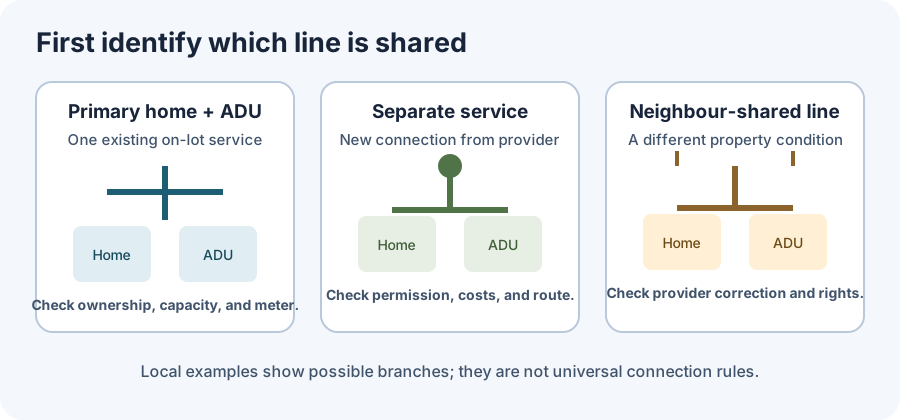
Attached and detached units, shared on-lot lines, separate services, and lines shared with a neighbour can lead to different provider checks. Sacramento’s guidance says an attached ADU uses the primary home’s existing domestic water line; a detached ADU may use that line or a separate service and meter. If another provider serves the parcel, Sacramento directs applicants to that provider. These options do not establish capacity or guarantee that a separate service is available.
Rohnert Park’s FAQ addresses a narrower case: a home that shares a water line with a neighbour. For that condition, the City says to disconnect the shared service and install a line from the City main to the property to serve the primary home and ADU; the existing lateral may need upsizing, and the FAQ identifies a City meter for the ADU. Confirm that the neighbour-shared condition actually applies and ask the City and provider about current design and approvals. Do not apply this corrective route to every shared service.
North Cowichan describes another configuration: one municipal water and sewer connection per residential lot, with secondary connections inside the lot installed and maintained by the owner. Its page says an upgrade may be needed based on the home’s age and service. The undated page cites older bylaws, so verify the current provisions and provider response before relying on that arrangement.
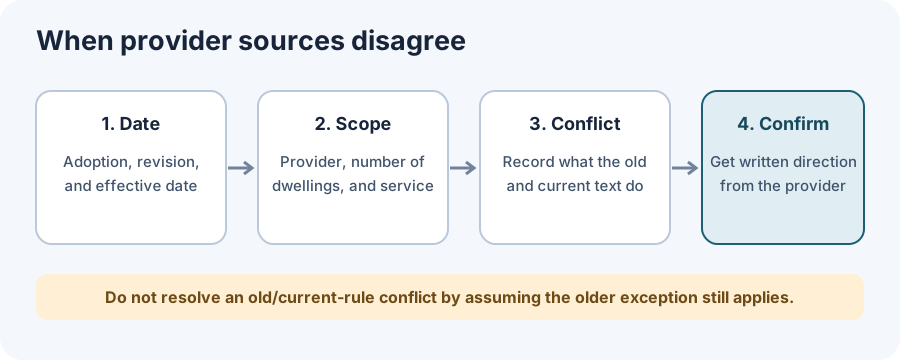
Austin Water presents an unresolved source-date question. A 2025 adopted criteria manual states an individual-meter rule for covered two-to-four-unit properties, while a separate 2015 sheet describes a possible ADU exception. The sources do not explain whether that older exception remains available under the current manual; request a written Austin Water decision rather than combining the documents into one rule.
Check water and sanitary capacity
An added dwelling can change water demand, fixture count, sewer flow, or the load on a private lateral. Find out what calculations, drawings, inspections, or forms the authority requires. Confirm who reviews them and whether a larger pipe, meter, service, or utility connection might be needed. A diagram or existing service record is not a capacity calculation.
Also check utility easements, shared connections, backflow requirements, abandonment plans, and connection or development charges. The fee schedule and servicing decision may sit with different authorities. Do not assume that a permit application, zoning approval, or service-area map confirms a utility connection.
Treat stormwater and drainage as separate checks
Review how runoff is managed on the lot, where water may discharge, and whether a site plan, drainage plan, detention or infiltration design, or plumbing permit review applies. Existing grading, slope, soil, groundwater, site coverage, and sewer conditions can affect the design. Keep these site-specific questions separate from the local ADU permission decision.
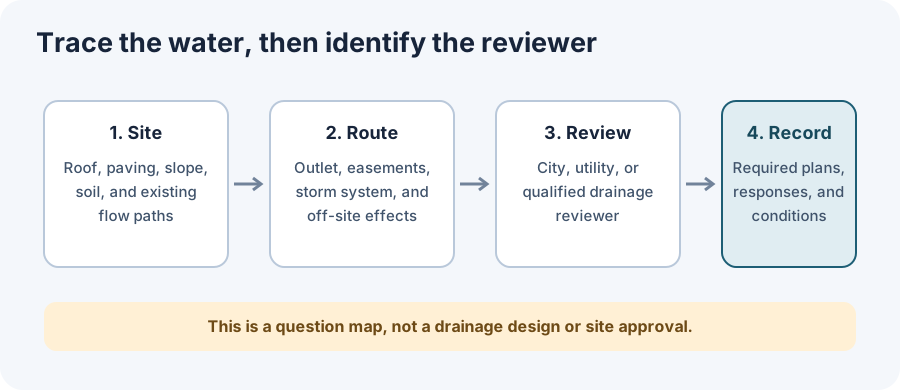
Vancouver, for example, has published rainwater-management pathways with applicability limits, exemptions, and permit-stage verification. The city’s 2026 sewer and engineered-pathway transition has its own application-date rules; use the focused Vancouver 2026 guide rather than applying those local thresholds elsewhere.
Local checklists illustrate different service questions
Hamilton asks applicants to verify that water service can support added fixtures and points to a pipe-sizing and hydraulic-load review before a building permit. London’s ARU guidance says services must accommodate the increased development and requires drainage patterns to be preserved. Madison’s detached-ADU guidance asks for water-lateral capacity verification and notes that an upgrade or new lateral may be needed. These examples describe different local processes; none confirms capacity on another property. See the focused Hamilton water-service guide and London site checks.
New York City separately distinguishes shared water service from a required separate shutoff under its ADU FAQ; that operational rule is not a water-capacity determination. See New York City utility controls.
Get the right confirmation
Before design or construction, ask the water or sewer provider and the relevant planning, plumbing, or engineering authority what evidence is needed for this parcel and project. A qualified professional may need to prepare calculations or plans. Keep the written response, applicable rule version, and unresolved conditions with the project records. If the provider has not confirmed capacity, say so plainly; do not convert “connected” or “in service area” into “approved.”
Properties with septic systems or private wells need a separate rural-servicing review. Electrical load and unit addressing also have separate authorities; see electrical service and addressing.