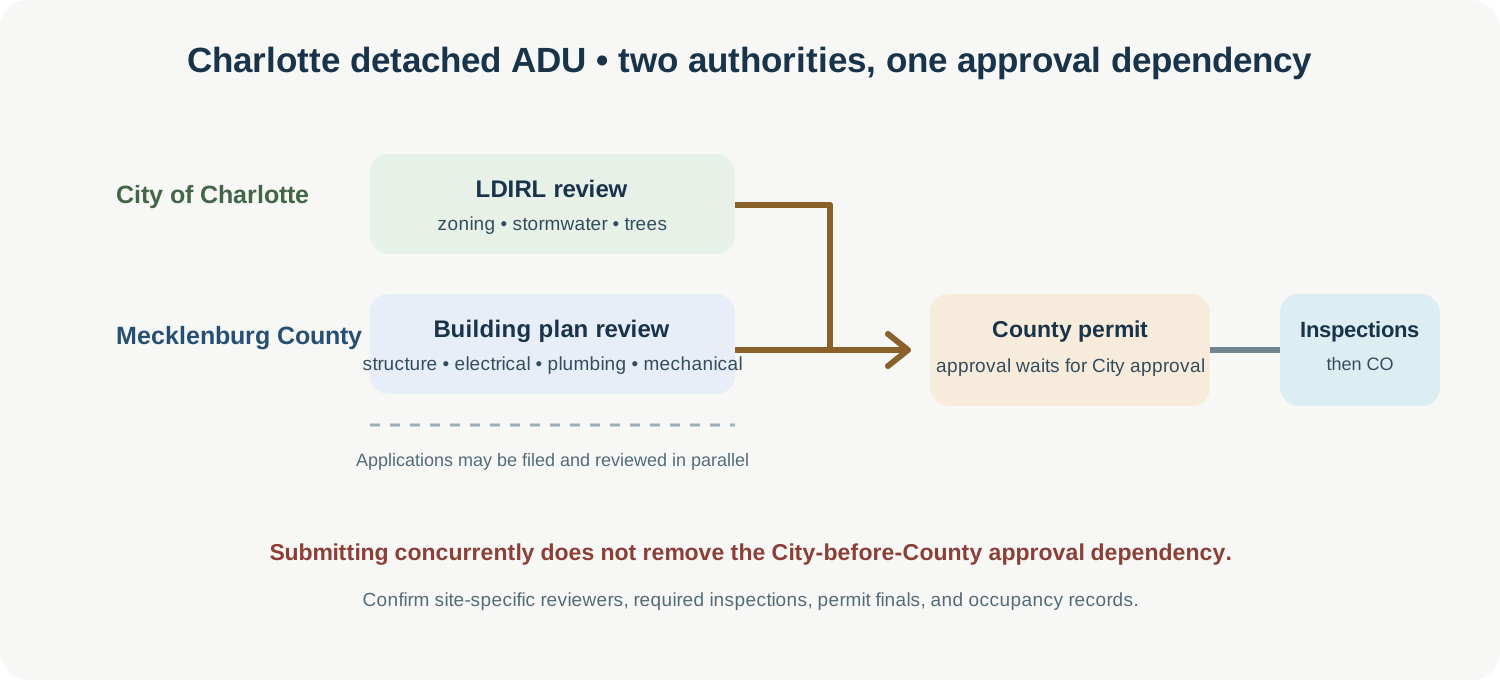
A detached accessory dwelling unit in Charlotte involves separate City land-development review and Mecklenburg County building review. The City checks zoning, stormwater, and tree requirements; the County reviews building-code plans and issues the building permit. Confirm that the parcel uses this City and County route before preparing an application.

The two reviews can overlap, but approval depends on the City decision
The City calls its land-development permit an Individual Residential Lot (LDIRL) permit. Charlotte’s residential review page says City and County review submissions may proceed before or concurrently with one another. The ADU hub clarifies the dependency: City LDIRL approval must come before Mecklenburg County can approve the building permit. Treat this as an approval sequence, not a rule that every application must wait to be filed.
Prepare the address and review packages
Start by confirming the address and detached project scope. Charlotte’s ADU hub says a new County address is needed before applying; Mecklenburg County’s address guidance also directs applicants to Addressing when a new-construction address is not established.
For the City review, the hub lists a site plan, building elevations, the ADU Declaration Form, and County address-assignment documentation. Submit the LDIRL application through the City’s Accela system. Zoning, stormwater, and Urban Forestry staff review the project; the applicable reviews depend on the site and proposal. Required fees are due before detailed review begins. City fees and County building-permit fees are separate, and the exact amounts depend on the current schedules and project.
Mecklenburg County’s residential plan review applies to new ADUs. Its instructions describe a separate County permit application, plan upload, and release for review. If reviewers request corrections, the applicant must provide revised plans. The County says permits are issued after plan approval. Keep the City’s comments and approved plans available so the County can verify that its building plans match the approved LDIRL package.
Inspections and occupancy
The City ADU hub directs owners to schedule required inspections with both City and County. Follow the instructions attached to each issued permit; site conditions and the work determine which inspections apply. Mecklenburg County says it issues a Certificate of Occupancy after all related permits are final and outside-agency holds have been released. The City identifies that certificate as required before the ADU is occupied or rented.
Using a City ADU Design & Development plan may support expedited County review through its master-plan process. It does not remove City LDIRL review or reduce City fees. This guide covers detached ADUs; the City’s current guidance directs people considering an attached ADU to contact its ADU team. Confirm current checklists, fees, project classification, utility steps, and inspection requirements with the issuing offices before filing.
For the general application package, see plans, inspections, and completion documents. For other approval prerequisites, start with choosing a planning or zoning route and ordinary permit fees.