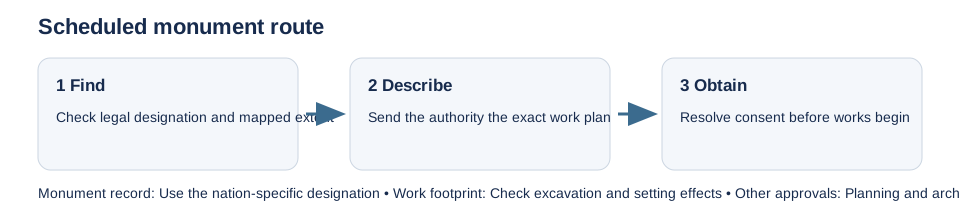
A scheduled monument is controlled through a monument-specific consent process. Before placing foundations, service trenches, drainage, access, or other works within the designated area, confirm the boundary and ask whether consent is required. In England, written consent is required before most works that would demolish, destroy, damage, remove, repair, alter, add to, flood, or cover a scheduled monument.
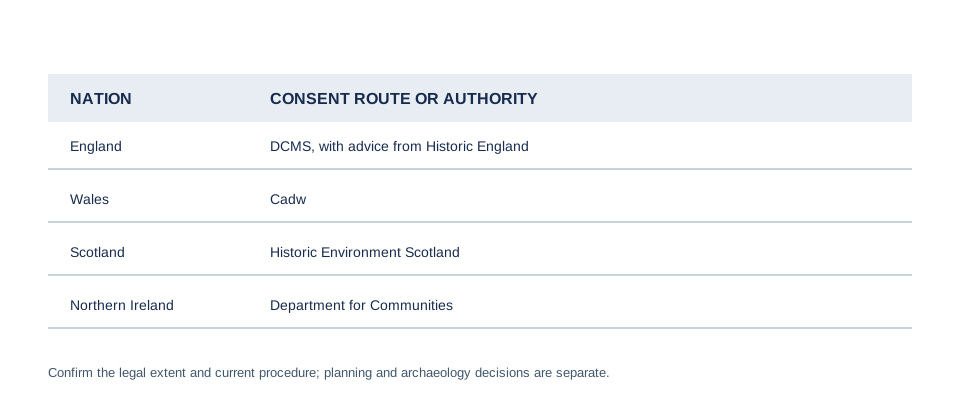
The four UK nations use different authorities and procedures. England routes applications through the Department for Culture, Media and Sport with advice from Historic England. Wales uses Cadw, Scotland uses Historic Environment Scotland, and Northern Ireland’s Department for Communities administers its own scheduled-monument process. Do not reuse one nation’s application form, exceptions, notice rules, or deadlines in another.
Check the monument record and legal description, then give the authority a scaled plan of the proposed works and ground disturbance. Ask whether the site boundary intersects the work, whether consent or an exception applies, and how archaeology or setting effects are handled. Map symbols can be indicative; use the record and written authority response to resolve a boundary question.
Scheduled-monument consent is distinct from planning permission, listed-building consent, and archaeological assessment. Obtain each applicable decision before work begins. The archaeological screening guide covers ground-disturbance checks beyond designated monuments.