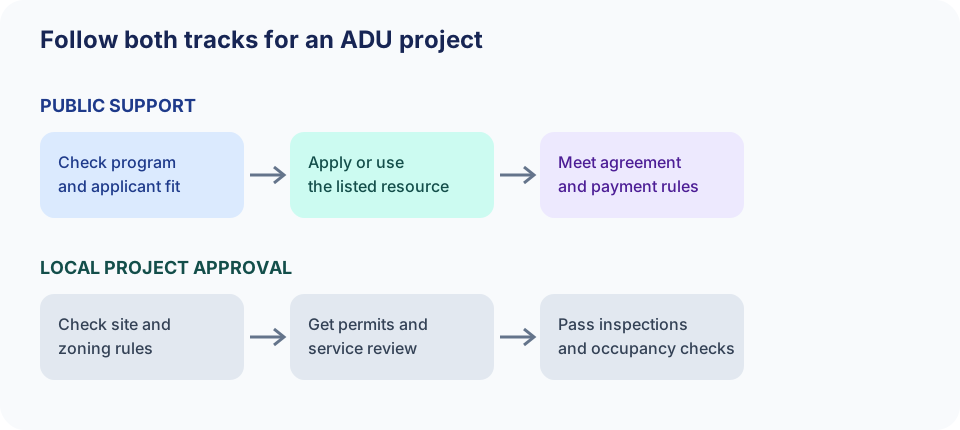
Public support can help with early design, feasibility, permit preparation, or selected fees. Each offer has its own geography and conditions. A template or fee waiver does not guarantee site approval or remove building, service, inspection, or occupancy requirements.
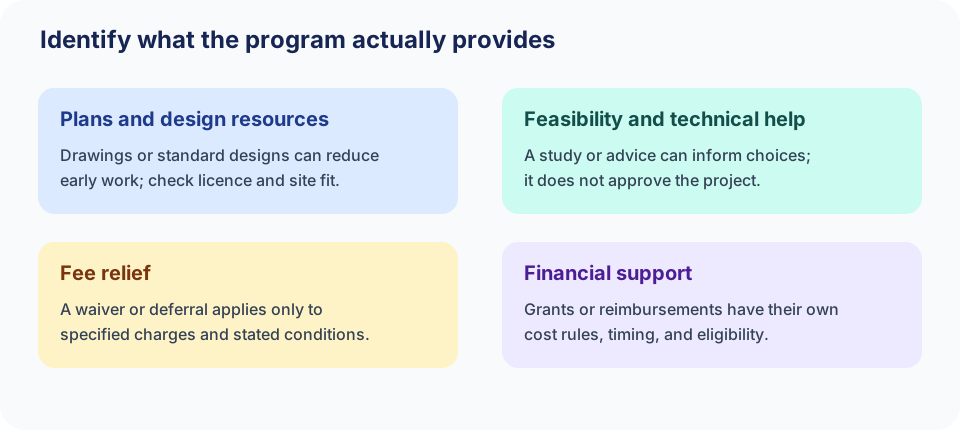
Design and early feasibility help
Some cities publish pre-reviewed or standardized designs to make early planning easier. Seattle and Vancouver describe plan resources for certain dwelling types, but readers still need to confirm that a design fits the parcel, applicable rules, utilities, and current permit process. A standard plan is a starting point, not a parcel-specific approval.
Massachusetts announced a statewide feasibility-study initiative through the Massachusetts Housing Partnership, a directory of professional providers, a design challenge intended to create public designs, and a resource center for initial site exploration. Participation in a study does not require a homeowner to build or hire that provider for later services. The announcement does not establish a particular property’s feasibility or a current award. The state’s ADU hub described proposed regulation changes with a public-comment deadline of October 9, 2026. That date has passed; check for any final regulation notice separately, because proposed text alone is not an adopted rule.
Fee relief and charge waivers
Fee relief may cover only one line of a larger cost schedule. Portland’s ADU System Development Charge waiver is a local example: an eligible new ADU may qualify for SDC relief, but approval involves permit review and a recorded covenant that restricts short-term rentals across every structure on the property for ten years from final inspection. The City does not publish a single dollar value for the waiver on the cited page. See the Portland waiver guide for the use limits, application route, and covenant consequences.
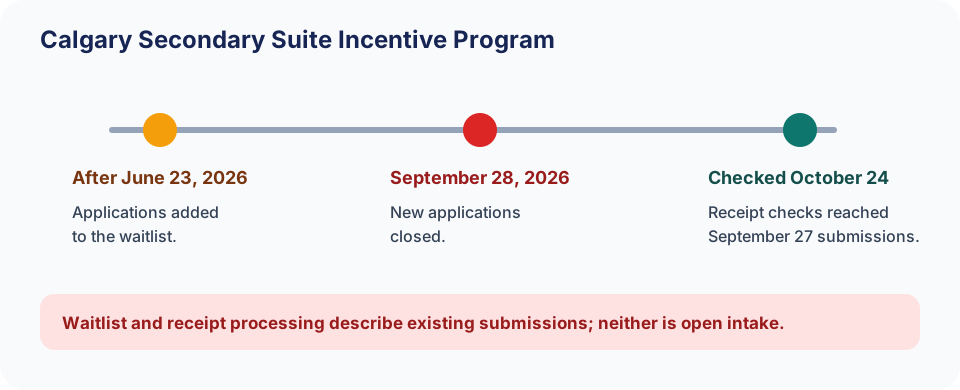
Other local examples illustrate how different the terms can be. Unincorporated Marin County’s program is stated to run through December 31, 2026 and lists ordinary waivers up to $2,500 for eligible ADUs, with larger additional waivers tied to five years of affordable use and annual documentation. The County page reports an extension through that date but its footer says the page was last updated August 20, 2025; confirm current intake and available funds directly with the County. Dublin, California, publishes permit-fee waivers for eligible applications through December 31, 2026; its page estimates $2,500–$6,000 in savings depending on valuation and sets size and long-term deed-restriction conditions. The Dublin fee-waiver guide explains the size thresholds and application path; the published end date is close, so confirm that applications are still accepted. Toronto describes a separate development-charge deferral pathway for eligible laneway or garden suites. Confirm each city’s current form, authority boundary, and terms. A deferral postpones payment; it is not the same as a waiver.
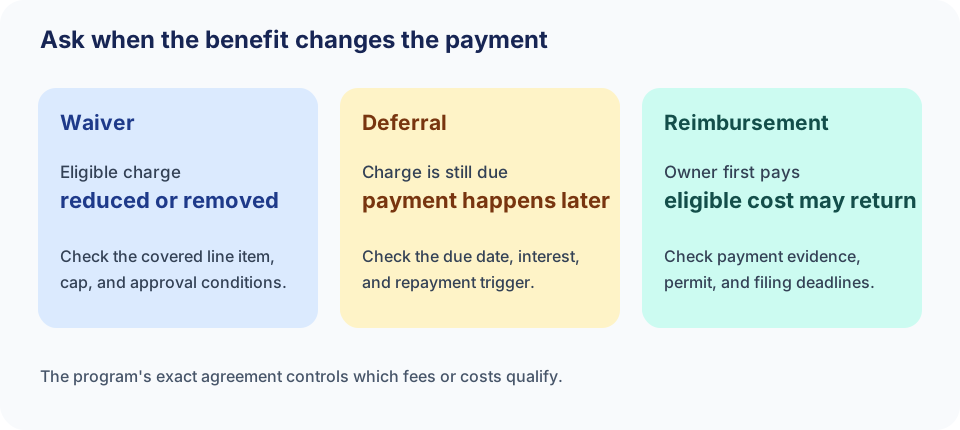
Calgary’s Secondary Suite Incentive Program closed to new applications on September 28, 2026. The City’s program page says applications made after June 23 were placed on a waitlist and that it is no longer accepting applications. When checked on October 24, the page said receipt verification was working on submissions dated September 27; that is a processing snapshot for prior submissions, not an open intake or a general fee waiver. The program was a reimbursement tied to qualifying safety work and suite registration. Read the Calgary guide for its prior terms. New York City’s Plus One program page reported intake closed on June 12, 2026, although the City announced a reopening in March.
Local examples of different kinds of help
Pasadena combines permit-fee reductions with a free City Standard Plan. Its current page lists one 374-square-foot studio design that complies with the 2025 California Building Code and may fit most single-family sites. The City also describes Residential Impact Fee treatment by size and reductions for a Housing Agreement or City plan. A pre-reviewed design cannot be modified without losing that review status, and neither the drawing nor fee relief is a site approval. See the Pasadena fee and plan guide.
Sacramento describes a waiver of the US$117 fee for an optional ADU zoning review beginning July 1, 2026, plus free Shelf Ready plans updated in December 2025. The source does not give the waiver end date or complete eligibility terms. Treat the review as early code feedback, not as a building permit or assurance that a particular design fits the parcel. See the Sacramento guide.
Pinole’s incentives apply only to the Amnesty ADU/JADU permit application fee. The page describes 50% or 100% reductions when the owner accepts a five-year affordable-rent restriction, and a separate 50% reduction for some moderate- or lower-income homeowners. Those reductions may combine up to a full application-fee waiver. The program does not waive separate sewer, building, or other permit costs; confirm current intake, fee amount, and covenant terms with Pinole. See the Pinole amnesty guide.
Whitby’s program reimburses selected fees only after the owner has paid them and received a qualifying permit. Its complete-application deadline is December 31, 2026; the program page says registration is due in 2027. Boston offers staff support and a design/permitting reimbursement grant up to US$7,500, but the City requires specific workshops, an architect, permit approval, and enrollment in its loan program. These are different assistance routes, not general permit-fee waivers. Read the Whitby and Boston guides.
Kingston lists up to C$5,000 for an accessibility grant and a separate service-constraint grant for eligible water-service upgrades, alongside its base ARU support. The rough-in grant is not stackable with the base incentive, and new applicants are currently waitlisted. See the Kingston ARU guide before including any stream in a budget.
Separate the support from the approval path
When evaluating a program, identify whether it pays for a study, design, construction item, permit fee, impact charge, or utility charge. Then check whether the applicant must apply before work starts, obtain a permit first, use a particular design, accept a title covenant, meet an affordability term, or complete inspections before reimbursement.
Ordinary permit fees and processing times belong to the permit authority’s application path. Development charges, connection fees, and utility capacity costs may be assessed separately. A pre-approved plan, design directory, or fee waiver does not establish zoning eligibility, code compliance, service capacity, or permission to occupy.